Pulse — debtor management for a collections call centre
A web app that loads client debtor files, decides which accounts agents should call first, and records every call and outcome in one place.
- Web app
- Data
- Automation
- debtor accounts managed
- ~20,000
- client portfolios
- 34
- accounts per monthly file, reconciled in one run
- 18,000
 (open full size in a new tab)
The problem
A collections call centre tracked calls and outcomes in spreadsheets, with little visibility for managers. Clients sent large monthly files, and working out which accounts were new, changed or withdrawn meant comparing them by hand.
Work was allocated manually, with nothing to show which accounts were most likely to pay. A previous system, built by an outside party, held personal data, but the business didn’t control it or know where it was hosted.
What I built
File import and reconciliation
Uploads large client files in one go, detects each format automatically, and previews new, updated and missing accounts before anything changes. Withdrawn accounts can be handed back in bulk, and reversed if needed.
Priority scoring
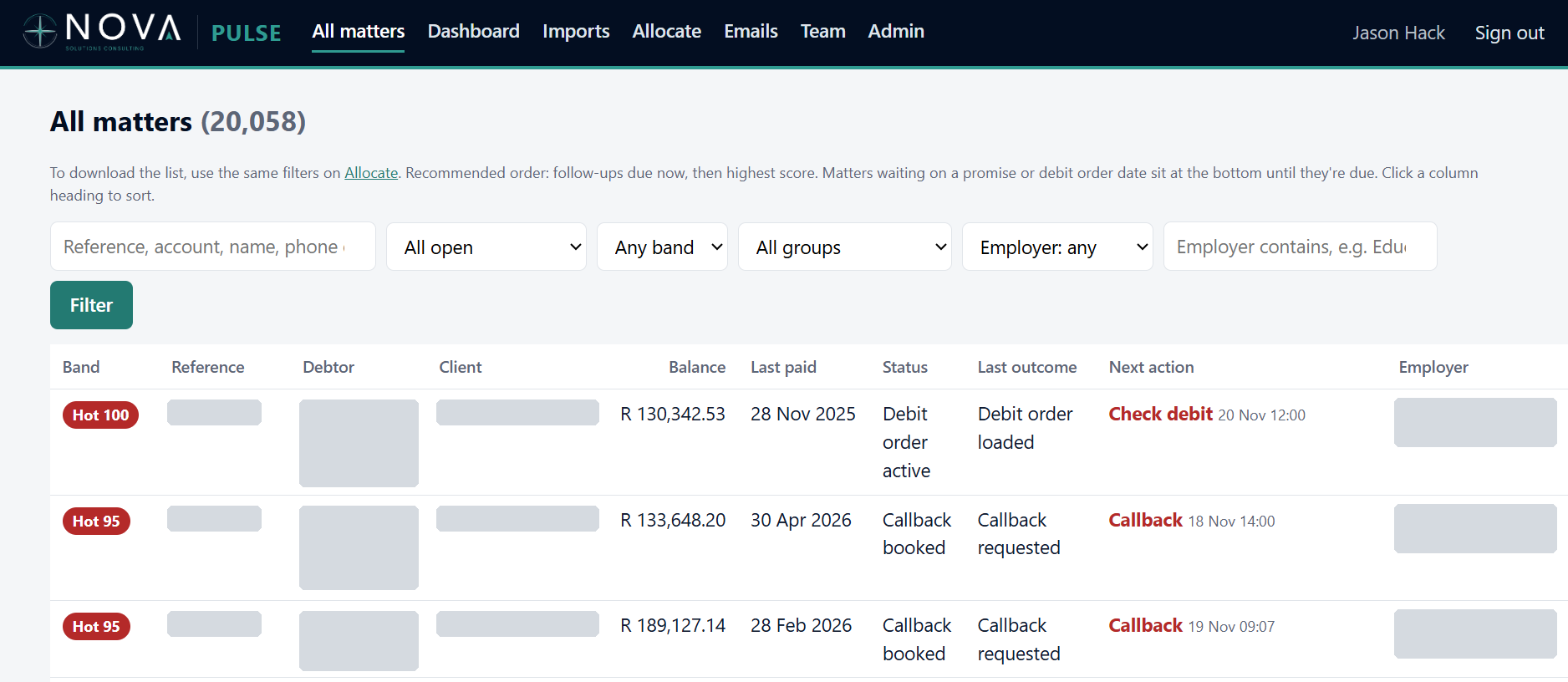
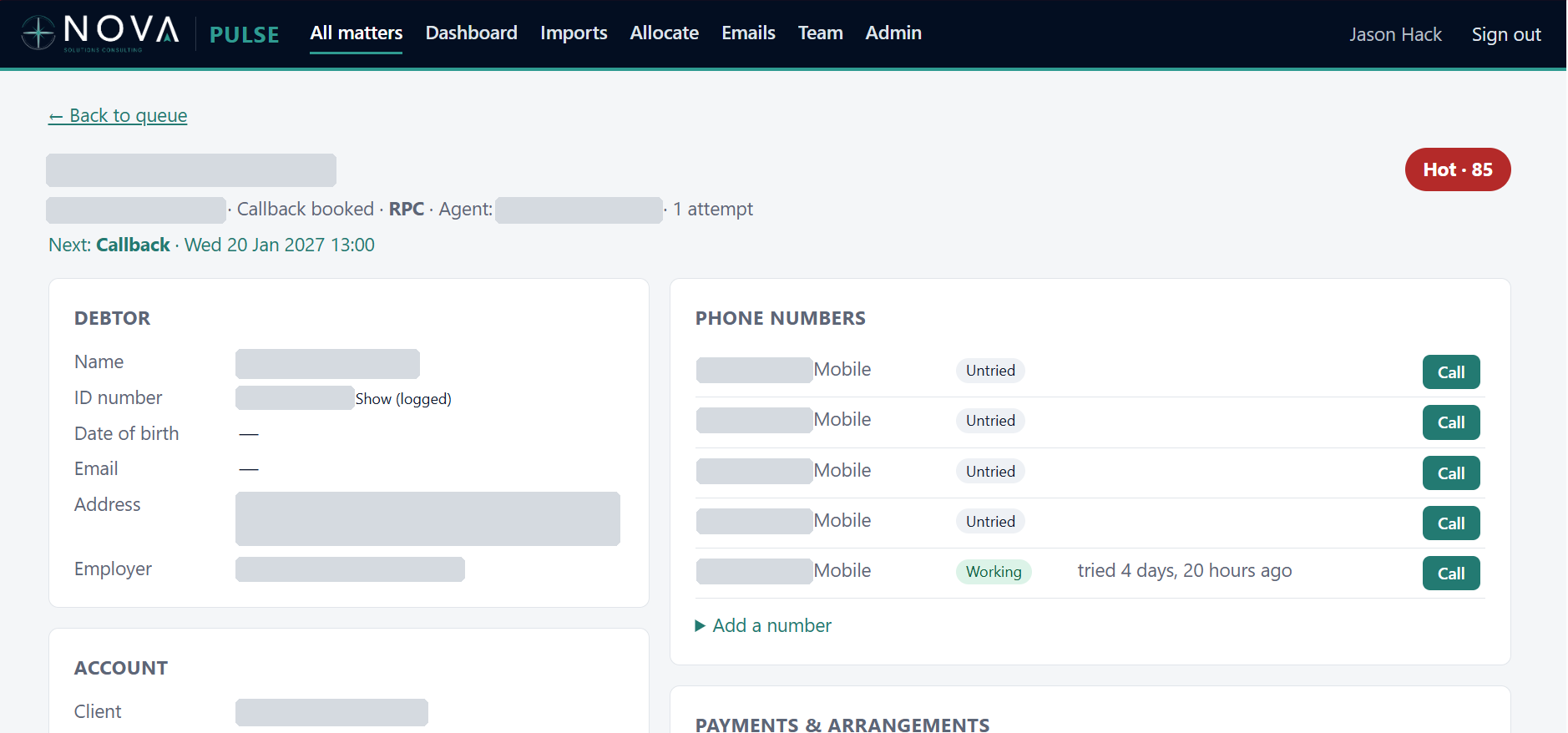
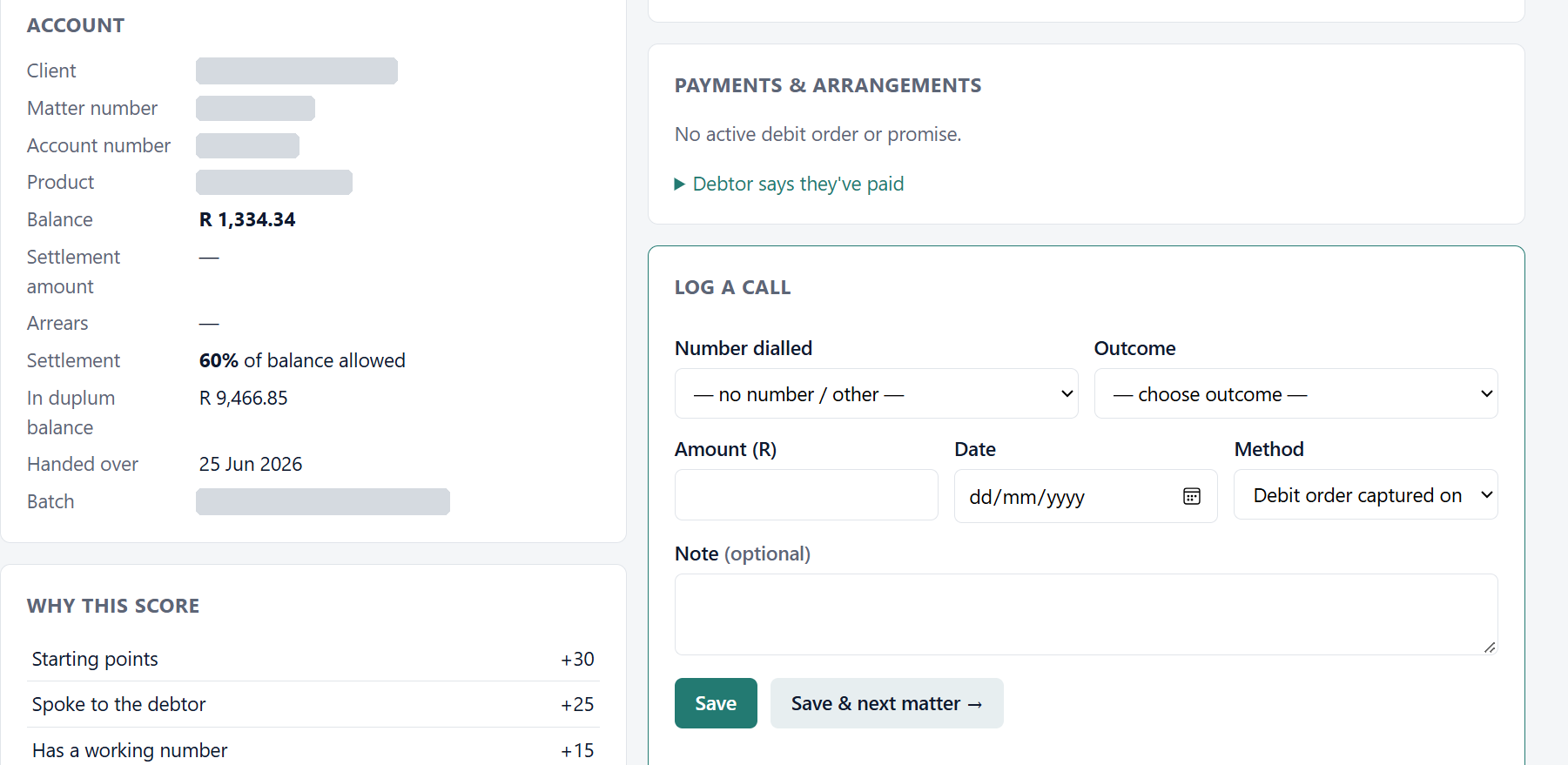
Every account gets a score from its balance, payment history and recent call outcomes, so agents work the accounts most likely to pay first.
Smart work queue
Follow-ups due now come first; accounts waiting on a promise to pay stay out of the way until their date.
Allocation
Supervisors filter by portfolio, score, employer or agent and split work across the team in a few clicks.
Call logging
Each outcome updates the account’s status, next action and score automatically.
Debtor emails
Branded templates, with second-person approval for bulk sends.
Search and export
Search and Excel export in seconds.
Results
- One handover file added 5,400+ new accounts in a single import.
- A 15,000+ account withdrawal was processed in one bulk action, with accounts that had active payment arrangements automatically kept open. When the client’s list turned out to be wrong, it was reversed cleanly.
- File reconciliation that used to be done by hand is now a preview-and-confirm step.
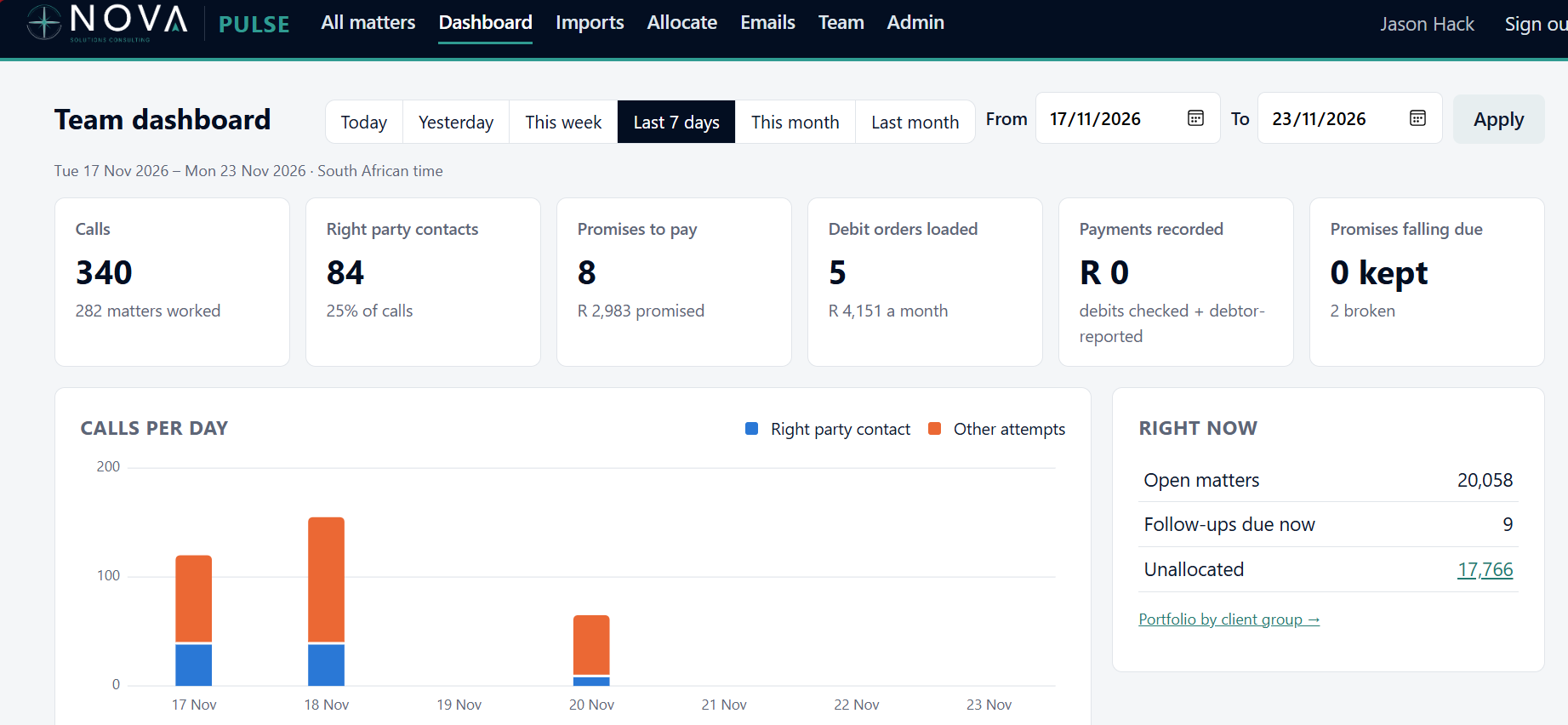
- Agent activity is visible in one place, and work is prioritised by data.
- The business owns and controls its own system and data.
Security
- Database and files hosted in South Africa (AWS Cape Town).
- Database and file storage encrypted at rest.
- ID numbers encrypted at the application level; HTTPS throughout.
- Role-based access for agents and supervisors.
- Credentials kept in a secrets manager and rotated automatically; no open server access.
- Audit log of key actions, second-person approval for bulk emails, and protected Excel exports.
Built with
- Python
- Django
- HTMX
- PostgreSQL
- AWS (EC2, RDS, S3, SES)
Backed by an automated test suite of 86 tests.
Screenshots
All screenshots use dummy data.
 (open full size in a new tab)
 (open full size in a new tab)
 (open full size in a new tab)